


OUTLINE:
Motion Sensors for Security Systems: A Complete Guide
 276
276Security systems today are far more advanced than simple locks and alarms. At the heart of modern protection lies one essential component — the motion sensor. Whether used in homes, offices, or industrial facilities, motion sensors serve as the “eyes” of a security system, detecting movement and triggering alarms or cameras.
In this article, we’ll explore what motion sensors are, how they work, their different types, and how to choose the right one for your security setup.
What Are Motion Sensors?
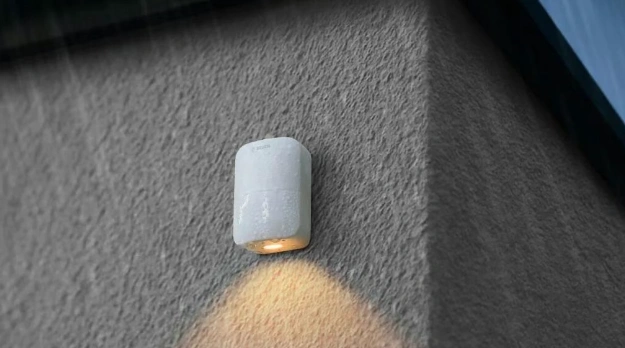
A motion sensor is an electronic device that detects physical movement within a certain area. Once motion is detected, it sends a signal to a control panel, triggering actions like sounding an alarm, turning on lights, or activating a surveillance camera.
These sensors are fundamental in security systems, smart homes, and automation environments, helping ensure safety, energy efficiency, and convenience.
How Do Motion Sensors Work?
Motion sensors operate by detecting changes in their environment. The detection principle varies depending on the sensor type, but generally, they monitor variations in infrared radiation, ultrasonic waves, or microwave reflections.
1. Passive Infrared (PIR) Sensors
PIR sensors are the most common type in home and office security systems.
They detect infrared energy emitted by humans and animals. When a warm body moves across the detection zone, the sensor perceives a change in infrared radiation and triggers an alert.
Advantages:
-
Low power consumption
-
Reliable for indoor use
-
Affordable and widely available
Limitations:
-
Limited detection range
-
Can be affected by heat sources or sunlight
2. Ultrasonic Motion Sensors
These sensors emit ultrasonic waves and analyze the reflections from nearby objects. If there’s any disturbance in the wave pattern, it indicates motion.
Advantages:
-
High sensitivity
-
Detects motion even behind thin obstacles
Limitations:
-
More expensive than PIR
-
Prone to false alarms from air movements or vibration
3. Microwave Motion Sensors
Microwave sensors send out continuous microwave pulses and detect the reflected signals from moving objects.
They can cover a larger area than PIR sensors.
Advantages:
-
Long detection range
-
Works well in harsh environments
Limitations:
-
High power consumption
-
Sensitive to electrical interference
4. Dual Technology Motion Sensors
To reduce false alarms, many modern devices combine two detection technologies—usually PIR and microwave. Both technologies must detect motion simultaneously before triggering an alert, which improves accuracy.
Applications of Motion Sensors in Security Systems
Motion sensors are integrated into various parts of a security setup:
1. Intrusion Detection
When motion is detected in a restricted area, the system sends instant alerts or activates sirens, preventing unauthorized access.
2. CCTV and Smart Cameras
Many security cameras use motion sensors to start recording only when movement occurs, saving storage space and power.
3. Lighting Control
In outdoor or parking areas, motion-activated lights enhance safety while conserving energy by turning on only when someone is present.
4. Perimeter Security
Microwave or dual-technology sensors are often used along fences or walls to monitor large zones, making them ideal for industrial facilities or military areas.
How to Choose the Right Motion Sensor
Selecting the ideal motion sensor depends on your environment and security goals. Consider the following factors:
-
Detection Range: Ensure the sensor covers the area you need to monitor.
-
Environment: For outdoor use, pick weatherproof and temperature-resistant models.
-
Power Source: Battery-powered sensors are flexible but require maintenance; wired ones are more stable.
-
False Alarm Reduction: Dual-technology sensors are ideal for minimizing unwanted triggers.
-
Integration: Choose models compatible with your existing alarm or smart home systems.
Installation Tips
-
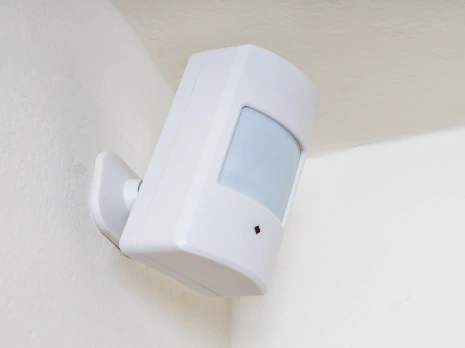
Position the sensor at a height of 6–8 feet for optimal detection coverage.
-
Avoid placing it near heat vents, windows, or moving curtains that can cause false alarms.
-
Regularly clean the sensor lens to maintain accuracy.
-
Test your sensor after installation using your system’s test mode.
Future Trends in Motion Detection
Modern motion sensors are becoming smarter and more connected. AI-powered systems can now differentiate between humans, animals, and objects, reducing false alarms dramatically.
In addition, integration with IoT (Internet of Things) enables remote monitoring via mobile apps and cloud-based analytics for better real-time control.
FAQs
Q1: Can motion sensors work in complete darkness?
Yes. PIR, microwave, and ultrasonic sensors can detect movement in total darkness, as they don’t rely on visible light.
Q2: Are motion sensors safe for humans and pets?
Absolutely. These devices emit very low levels of radiation or sound waves, which are harmless to people and animals.
Q3: What’s the best motion sensor for outdoor security?
For outdoor use, dual-technology or microwave sensors perform best due to their longer range and resistance to weather changes.
Q4: How long do motion sensors last?
Most motion sensors can last between 5 to 10 years, depending on quality and maintenance.
Conclusion
Motion sensors for security systems play a vital role in modern protection technology.
From basic PIR units to advanced dual-technology models, these sensors provide the first line of defense against intrusions and unauthorized movements.
As smart home and IoT ecosystems continue to evolve, motion sensors will become even more accurate, energy-efficient, and interconnected—ensuring safer and smarter environments for everyone.

Disclaimer: The views and opinions expressed by individual authors or forum participants on this website do not represent the views and opinions of Chipsmall, nor do they represent Chipsmall's official policy.

share this blog to:


Relevant Parts for Sale


DS18B20+
Digital, Local 1-Wire® -55°C ~ 125°C 11 b TO-92(TO-92-3) Temperature Sensors RoHS